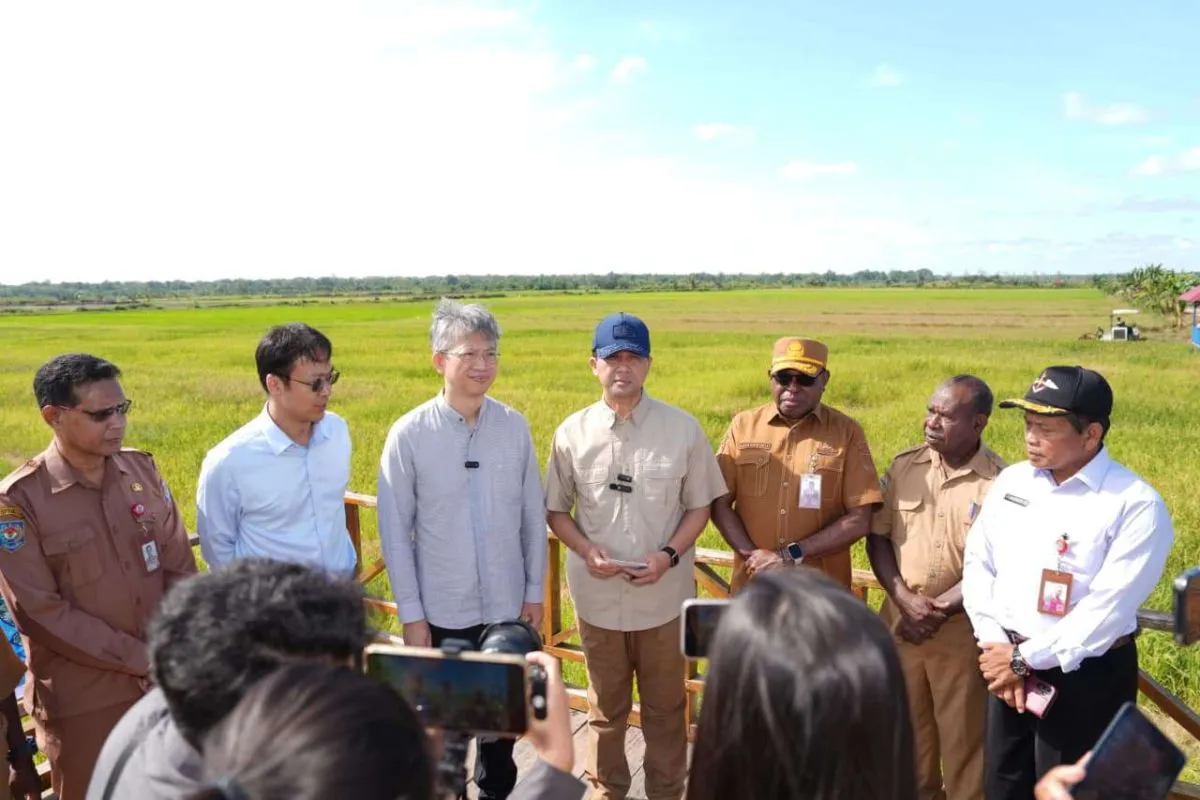
Indonesia and China have begun strengthening cooperation in the agricultural sector by exploring various development programs in the Salor transmigration area in South Papua.
These discussions took place during a joint visit by the Ministry of Transmigration of the Republic of Indonesia and representatives from the Chinese Embassy, who directly assessed the potential for agricultural development in the region.
One of the main agenda items discussed was the construction of a rice research center, which is expected to serve as a hub for innovation and agricultural technology development to boost national food productivity.
Additionally, both parties are exploring the establishment of an agricultural vocational school to improve the quality of human resources through education and training tailored to the needs of the modern agricultural sector.
The Salor region is considered to have significant potential as one of the nation’s food production hubs, supported by approximately 40,000 hectares of agricultural land.
With the support of technology, research, and improved infrastructure development, the region is expected to increase production yields while strengthening Indonesia’s food security.
The collaboration under discussion focuses not only on agricultural cultivation but also on the development of supporting industries, including facilities for the production and maintenance of agricultural tools and machinery in Merauke.
It is hoped that these facilities will help farmers operate and maintain modern agricultural equipment, thereby ensuring continued increases in productivity.
The visit to Salor is part of a series of inspections of several transmigration areas with economic and agricultural potential for development through international cooperation.
In addition to the agricultural sector, Indonesia and China are also exploring opportunities for collaboration in vocational education, poverty alleviation, investment, trade, and tourism.
This integrated development approach is expected to foster more equitable economic growth while improving the well-being of communities across various regions.
Through the strengthening of this cooperation, the government hopes that resettlement areas can develop into new growth centers that contribute to national development and long-term food security.