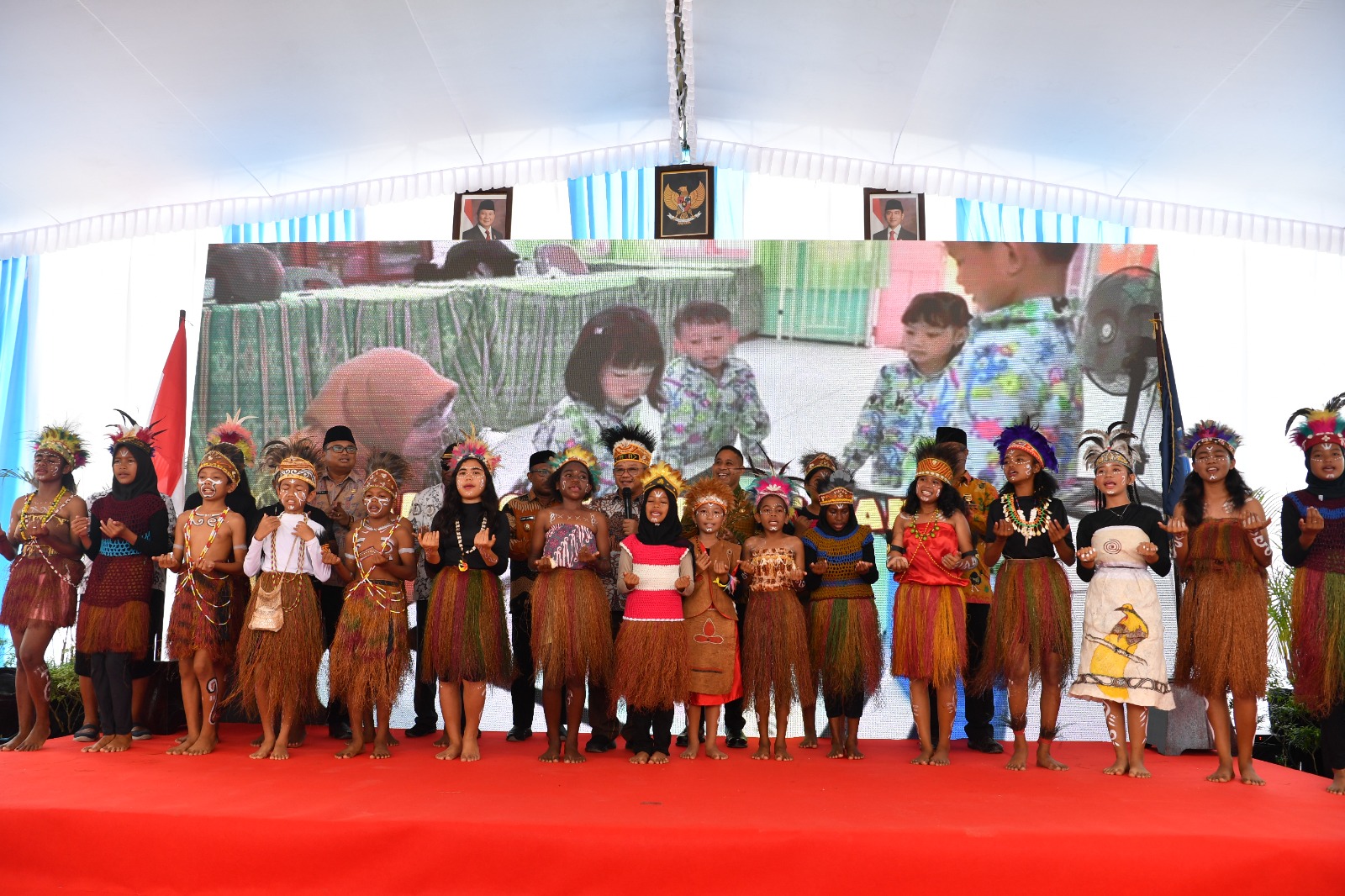
The government, through the Ministry of Primary and Secondary Education (Kemendikdasmen), has successfully completed the revitalization of 10 educational institutions in Teluk Bintuni Regency, West Papua.
The program, supported by a budget of Rp17.5 billion, was fully completed by the end of May 2026 and is part of the government’s efforts to accelerate the equitable distribution of educational quality in Eastern Indonesia.
The success of this program has spurred the expansion of the revitalization scope in 2026. An additional 25 schools have been included in the revitalization partnership, with a budget allocation exceeding Rp20.7 billion.
One of the schools benefiting from this program is SD Negeri 1 Bintuni Timur. After waiting for decades, the school finally has more adequate UKS (School Health Unit) facilities and restrooms to support the health and comfort of the school community.
Positive changes are also being felt at Babo State High School, located in a remote area. This school has received various new facilities, such as classrooms, a computer lab, a health room, a student council room, restrooms, and a renovated teachers’ office.
These additions not only improve the quality of the learning environment but also strengthen the enthusiasm of students and educators in carrying out the learning process.
In early childhood education, Pertiwi Barma Baru Public Kindergarten, established in 2010, has finally received permanent facilities including an administrative office, a health room, restrooms, and a safer, more comfortable play area.
Meanwhile, the Meyerga Integrated Junior High School in West Moskona District has received its first permanent facilities after years of operation. The school now has a science lab, a library, a health room, and student restrooms.
The new facilities available at various schools are expected to improve the effectiveness of learning and create a better learning experience for students.
Minister of Primary and Secondary Education Abdul Mu'ti emphasized that educational revitalization is not only focused on the physical construction of schools but also aims to create a learning environment that supports the overall improvement of educational quality.
Through this program, the government hopes that every Indonesian child, including those in remote areas, will have equal opportunities to access quality education and adequate learning facilities.