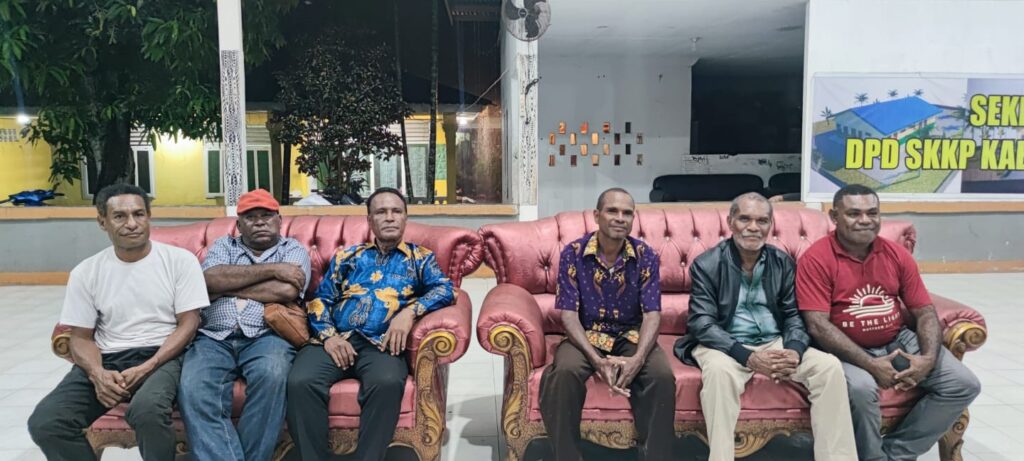
A number of Papuan traditional leaders have criticized the documentary Pesta Babi for failing to provide a comprehensive picture of development and the ongoing National Strategic Programs (PSN) in Papua.
They argue that a documentary should present various perspectives so that the public can obtain more complete and objective information on an issue.
Papuan traditional leader Yanto Eluay noted that the film featured more voices opposing development than perspectives from the government, other traditional leaders, or the public who support various development programs.
In his view, development in Papua should not always be viewed negatively, as several government programs also aim to create economic opportunities, generate jobs, and improve the well-being of local communities.
Nevertheless, Yanto emphasized that the protection of indigenous peoples’ rights remains of utmost importance, including rights to land, forests, water sources, and traditional territories that form part of the Papuan people’s identity.
He also urged that any content published for the public take into account the potential social impacts, particularly on the younger generation, who largely obtain information through digital media.
A similar view was expressed by Yakob Fiobetauw, who noted that the film emphasized an emotional narrative rather than providing a comprehensive explanation of the government’s current development objectives.
Meanwhile, Anderson Tokoro highlighted the importance of understanding the diversity of customary systems in Papua.
In his view, each region has distinct cultural characteristics, so information must be presented carefully to avoid misunderstandings.
On the other hand, Harly Ohhey expressed his support for various development programs in Papua. He believes that infrastructure, education, agriculture, and economic development can provide tangible benefits to the community if implemented inclusively and involve indigenous communities in the process.
Indigenous leaders hope that the emerging controversy can be resolved through dialogue and consultation so that development, the protection of customary rights, and the unity of the Papuan people can continue to proceed hand in hand.