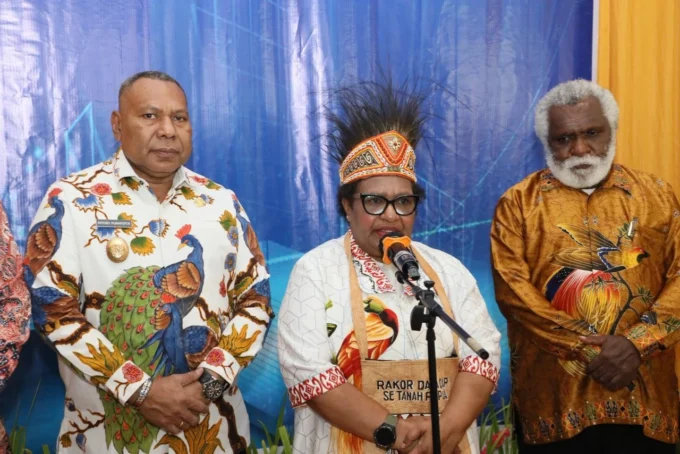
Deputy Minister of Home Affairs, Ribka Haluk, emphasized that accurate and integrated data on Indigenous Papuans (OAP) serves as a vital foundation for the implementation of the Special Autonomy (Otsus) policy in Papua.
According to her, data validity is essential to ensure that various government affirmative action programs truly reach their intended targets and are directly felt by the indigenous Papuan communities across the regions of Papua.
She explained that synchronizing OAP data will assist the government in formulating strategic policies, ranging from the distribution of Special Autonomy funds to education, health, and social welfare programs.
With a clear and integrated database, both the central and local governments are expected to be able to formulate development programs that are more effective and aligned with the needs of the Papuan people.
Ribka also urged all local governments in Papua to strengthen coordination in the data collection process to prevent discrepancies in data across regions.
According to her, inter-agency collaboration is crucial for creating a valid, transparent, and sustainable data collection system to support Papua’s future development.
Additionally, the government hopes that robust data collection will strengthen the protection of indigenous peoples’ rights while accelerating the equitable distribution of welfare and development in Papua.