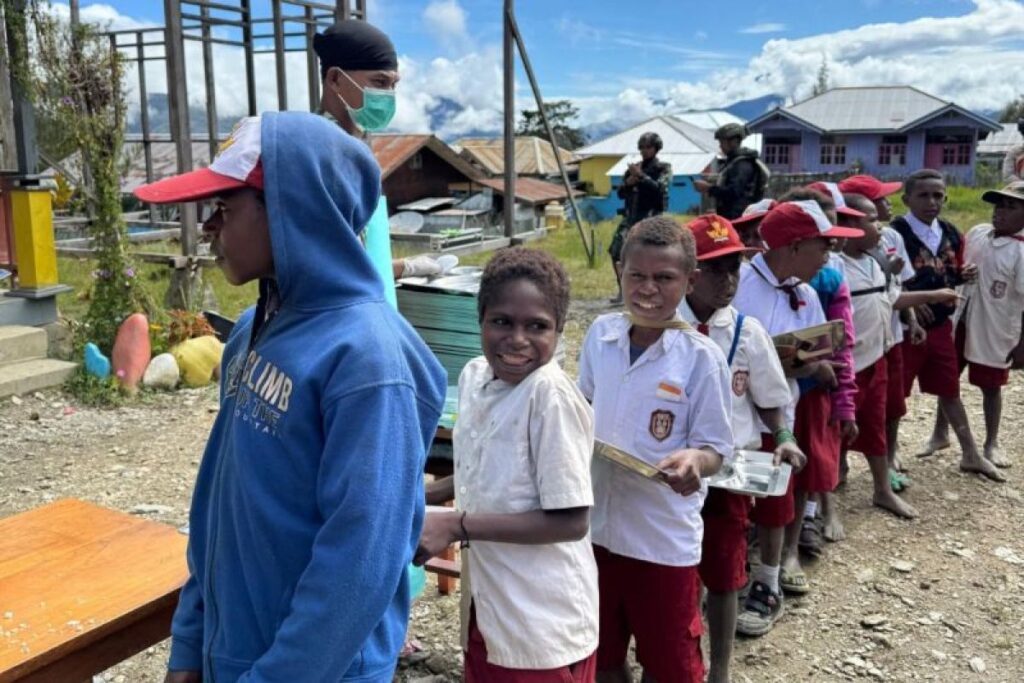
The Free Nutritious Meals (MBG) program in Papua is seen as not only helping to improve the community’s nutritional intake but also driving local economic growth in various regions.
The government is working to integrate the program with local food production potential, such as the fisheries, livestock, and local agricultural sectors, so that the benefits can be felt more widely by the people of Papua.
Billy Mambrasar, a member of the Executive Committee of the Special Autonomy for Papua, noted that the involvement of local MSMEs and cooperatives is a key factor in maintaining food supplies while creating new economic opportunities.
By utilizing local produce, the need for nutritious food for the MBG program is expected to be met sustainably without relying too heavily on supplies from outside the region.
The government is also promoting the development of supporting facilities such as cold storage and food distribution centers to strengthen the logistics chain in Papua, particularly in remote areas and 3T regions.
These steps are considered essential to ensure smooth food distribution and maintain food quality throughout the distribution process.
In addition to focusing on improving community nutrition, the MBG program is also seen as capable of creating new job opportunities for local residents through the involvement of local labor.
Papuan women and local entrepreneurs are also encouraged to participate in the supply and processing of food ingredients as part of community economic empowerment.
The government is optimistic that the synergy between national programs and Papua’s local potential can strengthen food security while accelerating economic development in eastern Indonesia.