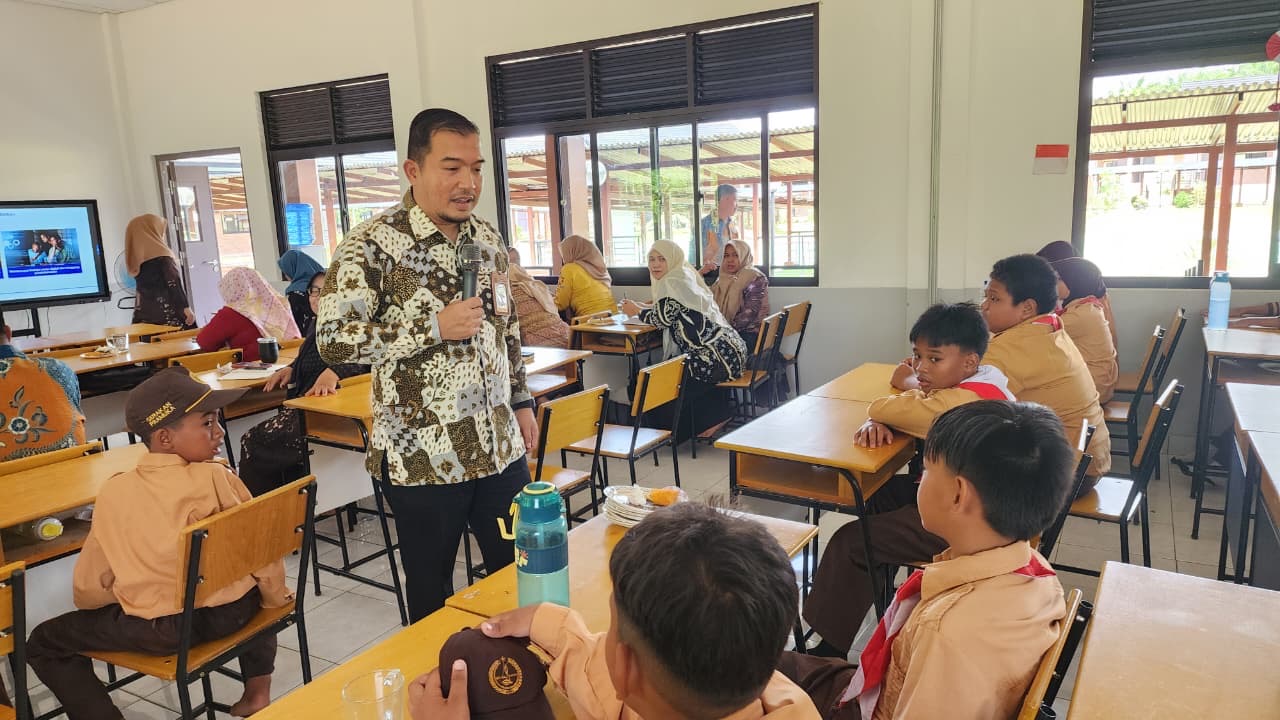
This program has had a positive impact, particularly on students in 3T regions who previously had limited access to digital technology.
Of the total 328 students, approximately 47 percent are actively using the “Ruang Murid” feature as a digital learning tool at school.
Through this program, students have begun to get accustomed to operating computers, opening learning applications, and accessing materials independently.
School officials note that the computer lab is now more active and interactive as students have become more confident in using technology.
Teachers have also observed a shift in students’ learning attitudes, as they have become more willing to explore digital materials without fear of making mistakes.
The program is conducted twice a month, involving 16 teachers who utilize various features such as Virtual Labs, Digital Books, Interactive Games, and character-building modules.
Collaboration among teachers through learning communities further aids the technology adaptation process and accelerates the implementation of digital learning at the school.
According to school officials, the “Student Space” feature makes learning more engaging because the material is presented visually, interactively, and in a way that aligns with the characteristics of today’s youth.
The school aims to increase app usage to 80 percent in the next semester by upgrading computer facilities and providing teacher training.
The Head of the Ministry of Education and Culture’s Data and Information Center stated that the digitization of education through Rumah Pendidikan can help improve the quality of learning while reducing the risk of school dropouts in remote areas.