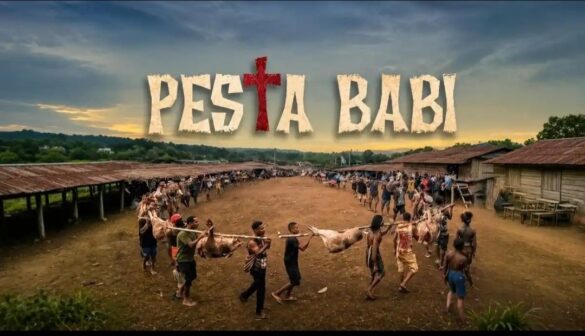
The documentary Pesta Babi by Dandhy Laksono and Cypri Dale has drawn public attention for highlighting the exploitation of customary lands and large-scale development projects in South Papua.
The documentary examines the impact of plantation projects, food estates, and bioethanol production on indigenous communities such as the Marind, Awyu, Yei, and Muyu tribes.
The film also highlights alleged deforestation, the loss of customary territories, and increased security forces activity around national strategic project areas.
The government’s and authorities’ response to the film drew attention after several screenings and discussion events in various regions were reportedly shut down.
The shutdowns were justified on grounds of maintaining public order and preventing potential conflicts stemming from content deemed sensitive.
These actions subsequently sparked criticism from human rights activists, students, and some politicians, who argued that such measures could restrict freedom of expression and limit public discourse.
On the other hand, the government is seen as striving to maintain stability and the image of national development in Papua, which has long been a key focus of the country’s strategic programs.
Meanwhile, the filmmakers and their supporters argue that the documentary is crucial for showcasing the perspectives of indigenous communities affected by development—perspectives that rarely receive widespread attention.
This controversy eventually escalated into a broader debate regarding the balance between economic development, environmental protection, the rights of indigenous communities, and freedom of expression in Indonesia.